
Developing strength does not always require a fully equipped gym or an extensive collection of exercise machines. Bodyweight training provides an alternative approach that uses controlled movement, balance and gradual resistance to develop physical capabilities. When organised appropriately, calisthenics can support improvements in muscular strength, movement control and general fitness.
The effectiveness of a training programme depends on more than exercise selection. Individual ability, recovery, consistency and progression all influence long-term development. The Movement Athlete provides personalised calisthenics training through an assessment-based system that adapts workouts according to the user’s current abilities. This approach makes structured bodyweight exercise more accessible to people working towards different fitness goals.
Understanding the Principles of Progressive Bodyweight Training
Calisthenics involves exercises in which bodyweight provides much of the resistance. Familiar movements include squats, push-ups, planks, lunges and different pulling variations. More advanced exercises may involve handstands, muscle-ups and other demanding strength skills.
One of the main advantages of this training method is its adaptability. A beginner who cannot perform a conventional push-up may begin with an inclined variation, while a more experienced athlete can progress towards exercises requiring greater strength and control.
This process is known as progressive overload. As physical capacity develops, training becomes more challenging through changes in exercise difficulty, repetitions, range of motion or total workload.
Progression should be gradual rather than determined by an arbitrary timetable. Attempting advanced movements before establishing adequate strength and technique can increase unnecessary injury risk.
A structured programme therefore begins with an assessment of current capabilities. Understanding which movements can be performed comfortably helps establish a realistic starting point and identify areas requiring additional development.
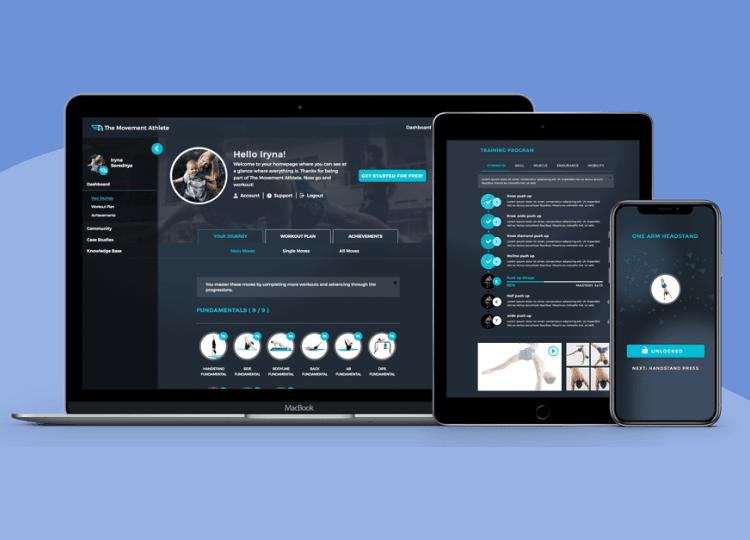
The training system offered by The Movement Athlete uses an initial assessment to determine ability across fundamental calisthenics movements. The resulting information supports the creation of personalised exercise progressions.
This can be particularly useful for individuals who have previously relied on random workout videos without following a consistent development plan.
Personalised Fitness Assessments and Training Goals
A standard exercise routine may not suit everyone equally. Differences in experience, mobility, available equipment and training frequency can influence how challenging an exercise feels.
A beginner may need to focus on basic movement patterns, while someone with an established fitness background could require more advanced progressions to continue developing strength.
Personalised training assessments help distinguish between these starting points.
The initial assessment available through The Movement Athlete evaluates fundamental movements and uses the results to inform individual workout recommendations.
This assessment-based approach can help participants avoid two common problems. Exercises that are too difficult may compromise technique, while routines that remain consistently easy may provide insufficient challenge.
Personalisation also creates an opportunity to consider different objectives. Some people prioritise general strength, others want to improve mobility and some are interested in learning specific calisthenics skills.
However, an online fitness assessment is not a medical evaluation. Individuals recovering from injuries or managing physical limitations may require professional guidance before beginning unfamiliar exercises.
Training goals should remain realistic and measurable. Rather than expecting immediate mastery of complex movements, participants can focus on improving individual exercise variations and maintaining regular participation.
Developing a Balanced Home Workout Routine
A balanced calisthenics programme should train different movement patterns rather than concentrating exclusively on familiar exercises.
Upper-body pushing movements, pulling exercises, lower-body strength work and core stability contribute to a more comprehensive training structure. Mobility exercises and appropriate recovery periods also play important roles.
For individuals exercising at home, a simple routine may include movements that require little or no specialist equipment. However, some pulling exercises and advanced progressions require suitable bars, supports or other securely installed apparatus.
Several principles can help organise an effective programme.
- Movement quality should remain a priority before increasing exercise difficulty.
- Gradual progression allows training demands to develop alongside improvements in physical capacity.
- Balanced exercise selection helps address different muscle groups and movement patterns.
- Recovery periods provide time for the body to adapt between challenging sessions.
- Consistent scheduling supports regular participation without requiring excessively long workouts.
- Progress monitoring helps identify improvements and areas that may require adjustment.
An appropriate warm-up prepares the body for more demanding movement. Controlled practice can then be followed by a gradual reduction in activity and suitable flexibility work.
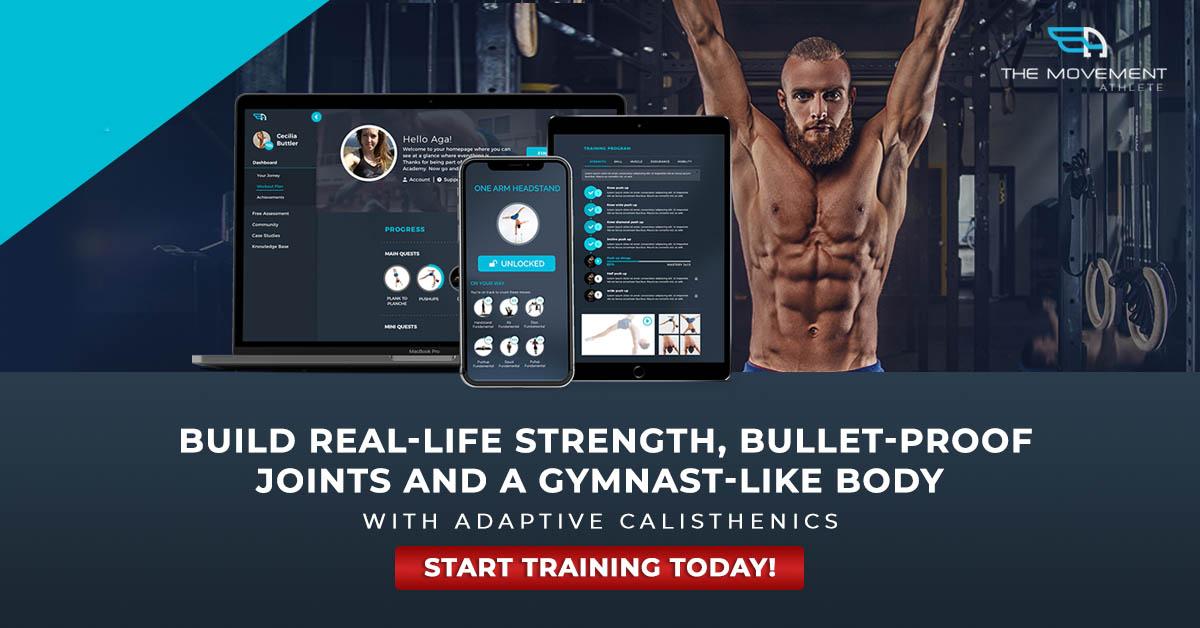
The training platform developed by The Movement Athlete incorporates exercise tutorials, progression pathways and workout adjustments designed around individual feedback.
These features can provide useful structure for people who prefer guided programmes rather than creating every session independently.
Improving Mobility and Movement Control Alongside Strength
Strength is only one component of functional physical fitness. Joint mobility, coordination and balance also contribute to the ability to perform everyday movements comfortably.
Calisthenics often requires several physical qualities to work together. A controlled squat, for example, involves lower-body strength alongside balance and mobility through the hips, knees and ankles.
Similarly, exercises involving upper-body support require adequate control of the shoulders and trunk.
Developing these abilities may improve general movement confidence, although progress varies depending on the individual and the training methods used.
Mobility training can be incorporated into warm-ups, dedicated practice sessions or recovery routines. Activities should be selected according to current flexibility and movement tolerance.
Controlled movement is particularly important when practising challenging positions. More extreme ranges of motion are not automatically better, especially if they are achieved without sufficient strength or stability.
Individuals with joint discomfort should avoid forcing movements through pain. Persistent symptoms deserve appropriate professional assessment rather than attempts to compensate through increasingly demanding exercises.
The aim of balanced bodyweight training is not simply to complete impressive movements. A sustainable programme should also support reliable technique and physical capacity across ordinary activities.
Maintaining Consistency and Measuring Long-Term Progress
One of the greatest challenges in home fitness is maintaining a routine after initial enthusiasm declines. Without a clear structure, exercise sessions can become irregular and progress difficult to evaluate.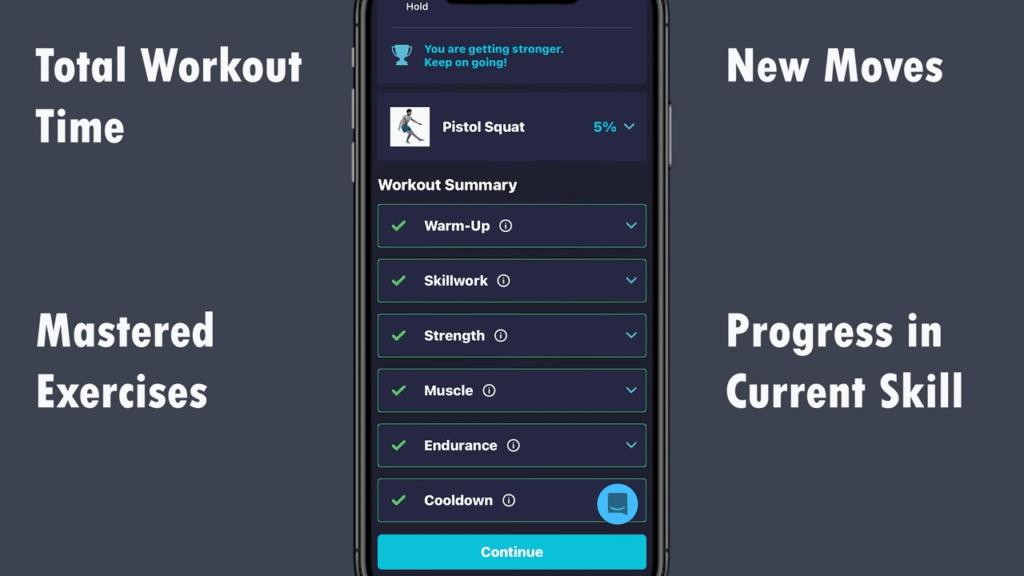
A realistic schedule should account for work commitments, recovery needs and other daily responsibilities. Shorter sessions performed consistently may be more manageable than ambitious routines that are frequently interrupted.
Recording completed exercises, repetitions and difficulty levels can provide useful evidence of improvement. Progress may appear as better technique, greater control or the ability to perform a more demanding variation.
Not every session needs to produce a personal record. Changes in sleep, fatigue and general activity can influence performance, making flexibility an important part of training.
The adaptive approach used by The Movement Athlete reflects the value of adjusting workout demands according to progress and feedback rather than relying on a permanently fixed routine.
For people training at home, this combination of personalisation and progressive exercise can help establish greater clarity around fitness development.
Successful calisthenics training ultimately depends on patience, appropriate challenges and sustained participation. By building fundamental movement abilities before attempting advanced skills, individuals can develop a more practical and organised approach to long-term physical fitness.