
Comparing commuter vs off-road electric scooters often comes down to one practical question: which surface does a rider actually cover most often, since pavement and trail demand different builds entirely. iscooterglobal splits its lineup along that exact line, with the i-series built for paved commuting and the iX-series, F-series, and iF1 aimed at rougher ground. Tyre type, suspension travel, and frame design all shift once a scooter moves from a bike lane to a muddy path. Looking at how those platforms differ clarifies which one matches a particular commute, trail, or mixed-use riding pattern.
Commuter Electric Scooters: The i-Series Platform
The i-series sits at the commuter end of the iscooterglobal range, built around the i8, i9, i9Max, and i10Plus. These models are designed for paved streets, bike lanes, and the kind of predictable daily travel that defines most urban commuting. The i9Max uses a 500W motor paired with a battery described as giving a 40km one-charge range, which supports a longer urban commute without a midday charge.
The i10Plus moves up to an 800W motor while staying focused on street-level riding rather than rough terrain. Neither scooter is marketed around off-road capability, and the frames and tyres reflect that choice. For anyone weighing commuter vs off-road electric scooters side by side, the i-series represents the lighter, pavement-oriented half of what iscooterglobal sells.
Off-Road Capability in the iX-Series Models
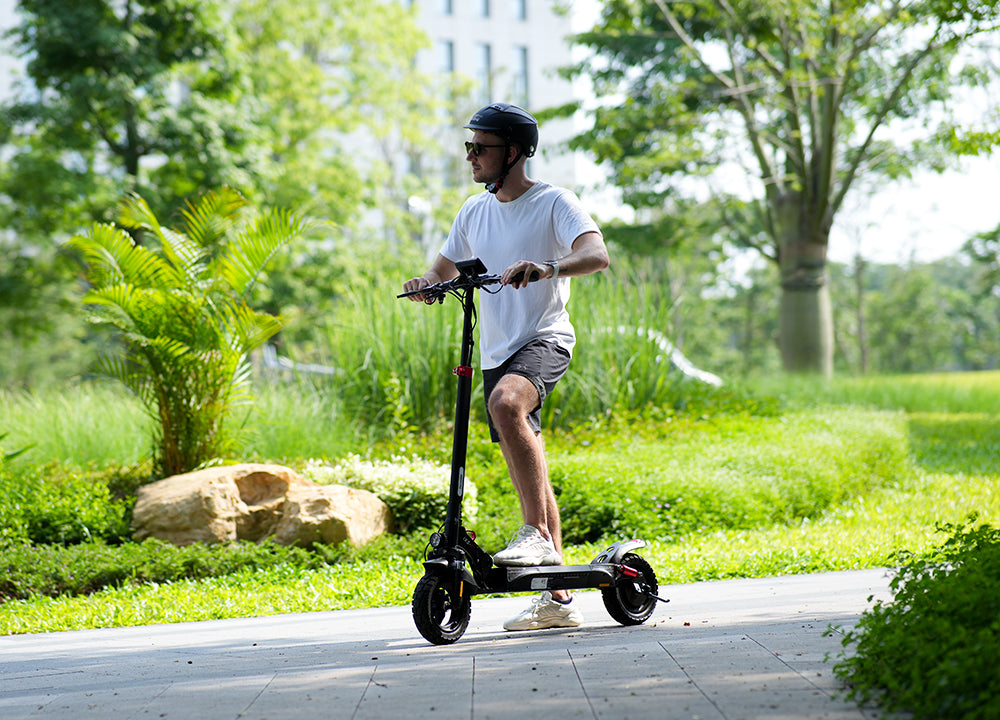
The iX-series, covering the iX3, iX4, iX5S, and iX7Pro, takes a different approach built around mixed and rough terrain. The iX3 runs on an 800W motor inside an aluminium alloy frame that the brand describes as suited to tough conditions, including muddy trails and rocky paths. Its battery also delivers up to 40km of range per charge, though that figure applies to far rougher ground than the i9Max ever sees on a typical commute.
The iX4 adds widened footboards, ergonomic grips, auto-grade pneumatic off-road tyres, a full lighting system, and app control for extra ride information. The iX5S steps up again with a 1000W motor, which iscooterglobal positions around long-distance off-road riding and a steady cruising speed. Moving through the iX-series shows a clear jump in build toughness compared with the i-series commuter models.
The F7Ultra and iF1: When Off-Road Meets Extended Range
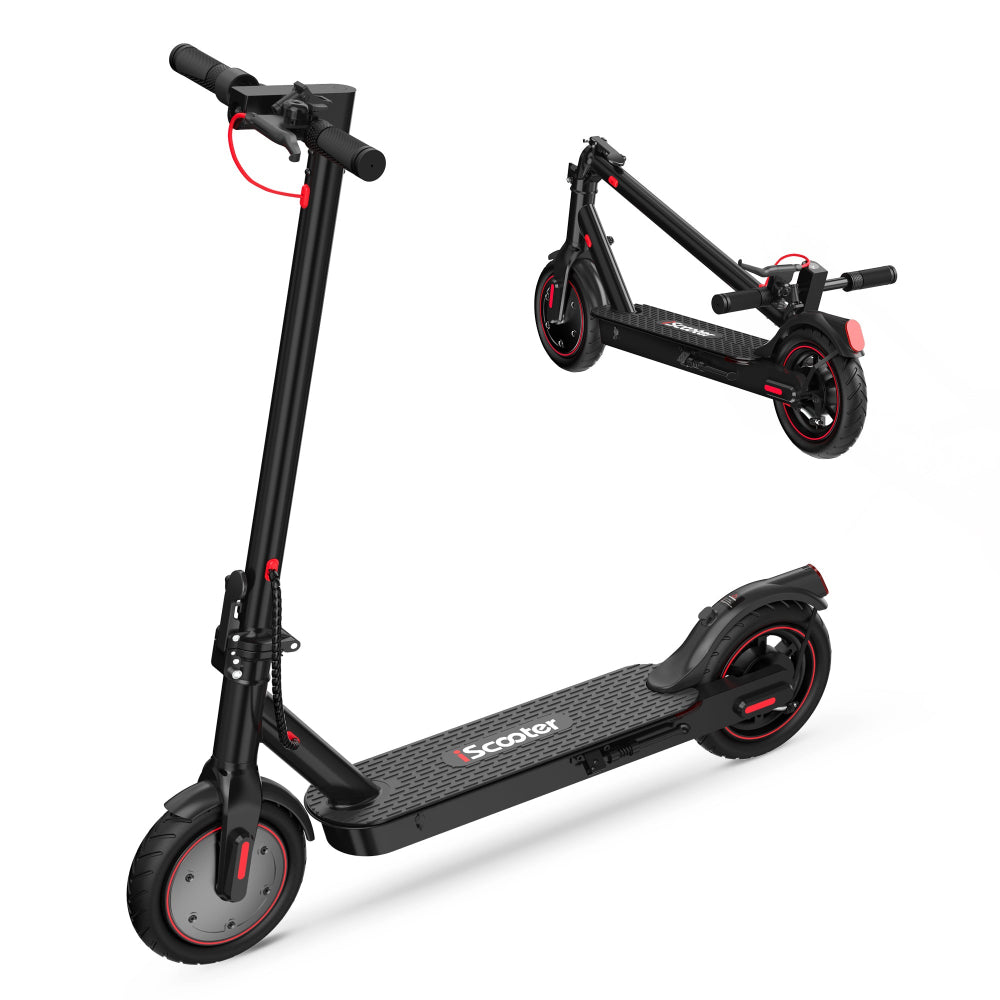
Some models blur the line between street commuting and rough-terrain riding rather than sitting cleanly in one category. The F7Ultra is described as capable of handling travel that moves from city streets to rougher terrain within the same ride, rather than committing fully to one surface type. A 52V 20Ah battery pack is listed as an available component for the F7Ultra, reflecting the extended range this model is built around.
The iF1 follows a similar idea with a 1200W motor, which the brand calls an all-terrain electric scooter rather than a pure commuter or pure off-road machine. Its listed battery option, a 48V 10Ah unit, supports the longer rides the brand associates with the model. Together, the F7Ultra and iF1 give iscooterglobal a middle option for anyone whose daily route mixes smooth pavement with rougher patches.
Motor Power and Acceleration Across the Range
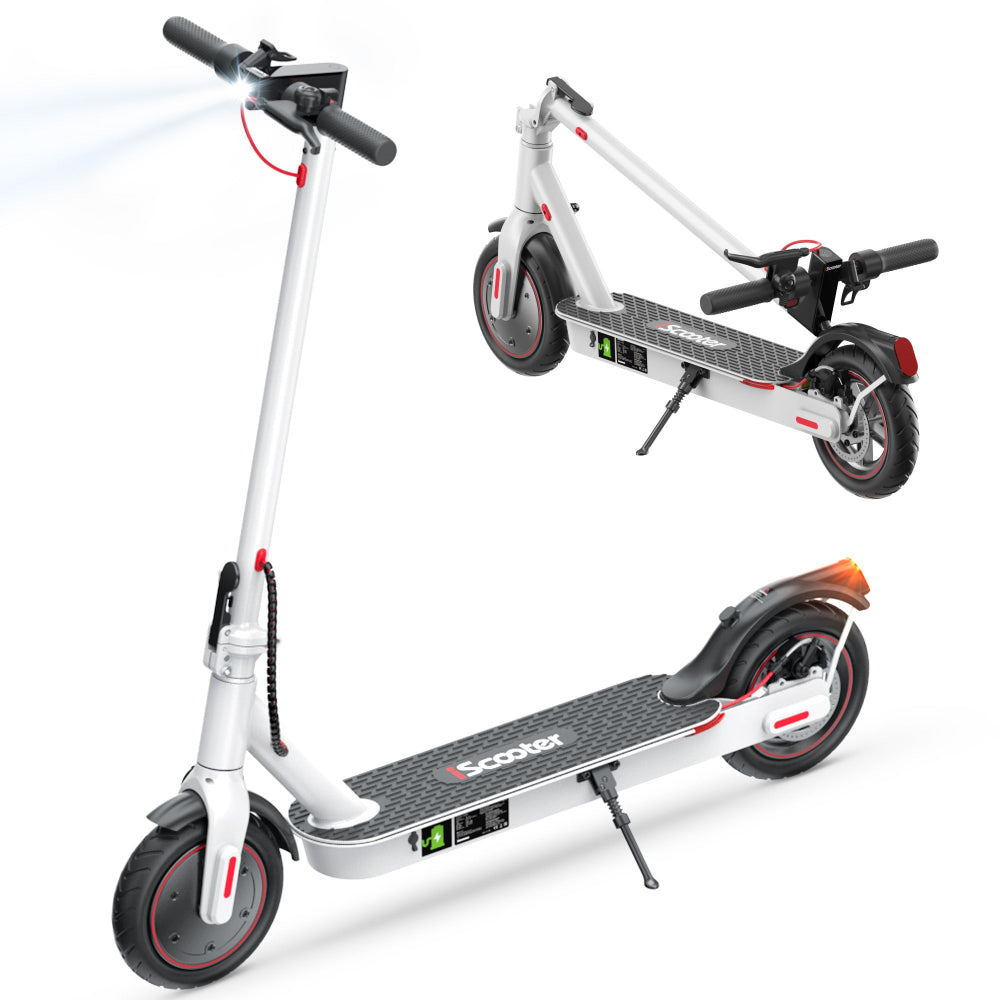
Motor wattage is one of the clearest technical markers separating commuter vs off-road electric scooters within this lineup, and it tends to be the first spec riders check before range or tyre type. The i-series tops out at 800W with the i10Plus, while the off-road iX-series and iF1 climb from 800W up to 1200W. Higher wattage in the off-road models supports the extra demands of loose or uneven surfaces, where maintaining speed takes more continuous power than it does on flat pavement.
- The i8 and i9 sit at the accessible end of the commuter line, aimed at short urban trips rather than rugged use.
- The i9Max steps up to a 500W motor and a battery rated for a 40km one-charge range, suited to longer daily commutes.
- The i10Plus uses an 800W motor while remaining focused on paved streets rather than off-road terrain.
- The iX3 pairs an 800W motor with an aluminium alloy frame built for muddy trails and rocky paths.
- The iX4 adds auto-grade pneumatic off-road tyres, widened footboards, and app control alongside its off-road-oriented build.
- The iX5S and iX7Pro push further into off-road territory with higher motor output aimed at longer, rougher rides.
Suspension, Tires, and Terrain Handling

Beyond motor numbers, suspension and tyre choice do much of the work in separating these two groups. The iX4’s auto-grade pneumatic off-road tyres and the iX3’s shock absorption system at the front and rear are built to soak up impacts that a commuter scooter is never asked to handle. Those details matter more on loose gravel or uneven paths than on a flat bike lane.
Commuter models in the i-series rely on simpler tyre and suspension setups suited to consistent, paved surfaces. That is not a shortfall, since the i-series was never built around rough terrain in the first place. It is simply a different design priority, one that favours lighter weight and street efficiency over the added durability off-road models carry. Recognising that distinction helps explain why iscooterglobal keeps the two platforms separate rather than blending every feature into one scooter.
Terrain, in the end, remains the dividing line running through the whole comparison between these platforms.