
Picking between clip-in and tape-in hair extensions is less about looks and more about daily routine, since both formats can add length and volume with the right hair type. The clip-in vs tape-in extensions question usually comes down to how often a style needs changing, how much time exists for application, and how much upkeep feels manageable. Foxy Locks offers both formats, each made from 100% Remy human hair, which makes the brand a useful case study for comparing the two approaches.
Clip-In Wefts and Their Everyday Role
Clip-in hair extensions from Foxy Locks use discreet, flat-laying wefts that sit against the scalp for a natural finish. They are made from 100% Remy human hair and come in a wide range of shades, including blonde, brunette, black, red, and balayage tones. The line includes double wefted lace full head sets, seamless clip-in styles, an invisible deluxe clip-in version, and a one-weft volumizer for targeted thickness, giving several ways to add fullness without a long-term commitment.
Because the wefts clip directly onto sections of natural hair, no adhesive or heat bonding is involved in fitting them. This places clip-ins in the category of temporary extensions, worn for a day or an evening and then taken out before sleep. Foxy Locks positions this format around quick, everyday transformation rather than a fixed, ongoing style.
Tape-In Extensions: A Semi-Permanent Alternative
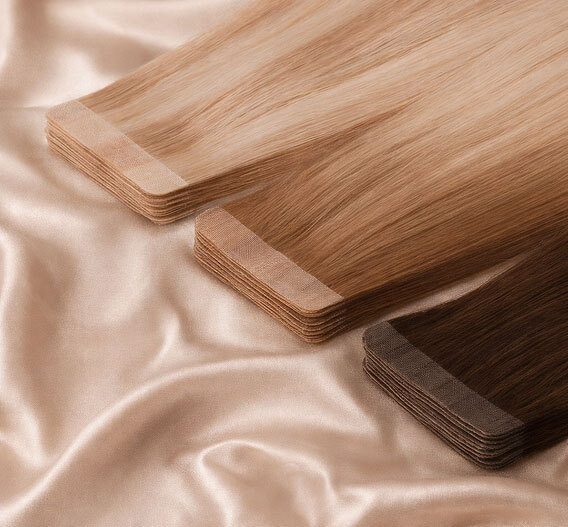
Tape-in extensions sit on the other end of the spectrum, bonding small sections of hair together with adhesive strips rather than clips. Foxy Locks lists tape-in extensions alongside clip-ins and clip-in ponytails, built from the same 100% Remy human hair used across the brand. Because the wefts are bonded rather than clipped, they stay in place through washing, sleeping, and regular daily activity.
This semi-permanent structure is what separates tape-ins from clip-ins most clearly in the clip-in vs tape-in extensions comparison. Tape-ins are not removed nightly, which changes how they need to be cared for and how often they need attention. For anyone weighing hair extension formats, this distinction tends to be the deciding factor.
Application Process and Time Differences
Clip-in application can be done at home without assistance, since the wefts are simply sectioned in and clipped shut. It describes its clip-in designs as quick and easy to apply, which fits the format’s role as an everyday or special-occasion option. No adhesive, heat, or professional tools are required to fit or remove them.
Tape-in extensions typically involve a more deliberate fitting process, since the adhesive wefts are placed in sections close to the scalp. This tends to take longer than clipping in a set and suits planned styling rather than same-day changes. The gap in application time is one of the clearest practical markers when weighing clip-in vs tape-in extensions for a particular routine.
Durability and Longevity Across Both Formats
Foxy Locks states that its extensions, made from ethically sourced 100% Remy human hair with aligned cuticles, can last up to a year with proper care. This longevity claim applies to the quality of the hair itself rather than to how long any single application stays fitted. Both clip-in and tape-in formats draw on the same hair quality, even though they are worn in very different ways.
Clip-ins are removed and reapplied each time they are worn, so their condition depends on how the wefts are stored and handled between uses. Tape-ins remain fitted for an extended stretch before needing to be removed or reapplied, making wear duration rather than reapplication frequency the relevant measure. This is a meaningful distinction for anyone trying to match a format, whether clip-in or tape-in, to a routine.
Daily Care and Maintenance Requirements
Clip-in sets from Foxy Locks are described as easy to heat style and care for, since they can be taken out before washing, sleeping, or exercising. That flexibility means the natural hair underneath is not exposed to the extensions constantly, which simplifies everyday hair care. Styling tools can be used on the wefts directly when they are off the head, too.
Tape-in extensions require more consistent attention because they remain in place between fittings. Brushing technique, product choice near the roots, and how hair is tied back all become more relevant once tape-ins are bonded in. Foxy Locks’ approach around tangle-free, cuticle-aligned Remy hair applies to both formats, but the daily routine around tape-ins is less flexible by nature.
- Clip-in extensions can be fitted and removed at home within minutes, while tape-in extensions usually need a more involved fitting session.
- Clip-ins are worn for a single day or occasion and taken out before sleep, whereas tape-ins stay bonded in place for an extended period.
- Clip-in wefts can be heat styled off the head before application, giving more flexibility for experimenting with looks.
- Tape-ins blend into a daily hair routine without needing reapplication each morning.
- Removing clip-ins is immediate and tool-free, while tape-ins typically need a more careful removal process to protect the natural hair.
Choosing Between Clip-In and Tape-In Formats

A preference for changing hair length for a single event, or avoiding bonded extensions altogether, tends to point toward a clip-in set, and the Foxy Locks clip-in range, spanning double wefted lace full head options to invisible deluxe styles and the one-weft volumizer, supports this kind of occasional or rotating use. The format suits anyone who values the option of taking extensions out at the end of a day.
By contrast, a preference for a more continuous look without daily fitting tends to favour tape-in extensions, since they remain in place across washing and sleeping. Both options draw from the same 100% Remy human hair standard, so the clip-in vs tape-in extensions decision largely comes down to how often a change in routine is wanted versus a stable, ongoing style.
Both formats ultimately offer a route to added length and volume, just on different terms of commitment and daily handling.