
A lithium iron phosphate battery upgrade can reduce weight and increase usable capacity, but it should be planned as an electrical system rather than as a simple battery swap. Voltage, current demand, charging equipment, cables and protection devices all need to work together. Vatrer sells LiFePO4 batteries for golf carts, RVs, marine use and home energy storage, with products across several voltage and capacity ranges. The correct starting point is the existing system specification and the loads the battery is expected to support.
Confirm Voltage and System Compatibility First
System voltage must match the application or the approved conversion design. A 12-volt RV house system is different from a 48-volt golf cart, and combining batteries in series or parallel changes the electrical requirements. Motor controllers, inverters, chargers and accessories all have voltage limits. A buyer should not assume that a higher-voltage battery is an upgrade unless the rest of the equipment is designed for it.
Vatrer provides batteries for multiple applications, so product selection should begin with compatibility rather than with amp-hour capacity alone. The continuous and peak discharge limits of the battery management system need to support the expected load. Golf carts can demand high current during acceleration or hill climbing, while RV inverters may create large loads when powering appliances. Marine motors also have manufacturer requirements that should be checked before a battery is selected.
Calculate Capacity From Real Loads and Runtime
Capacity planning works best from energy use. Amp-hours are useful within one voltage, but watt-hours make different loads easier to compare. A household appliance running through an inverter consumes more battery energy than its AC rating alone may suggest because conversion losses are involved. A realistic plan includes lights, refrigeration, electronics, pumps and occasional high-load devices, then adds a reserve rather than assuming the battery should be routinely taken to its absolute limit.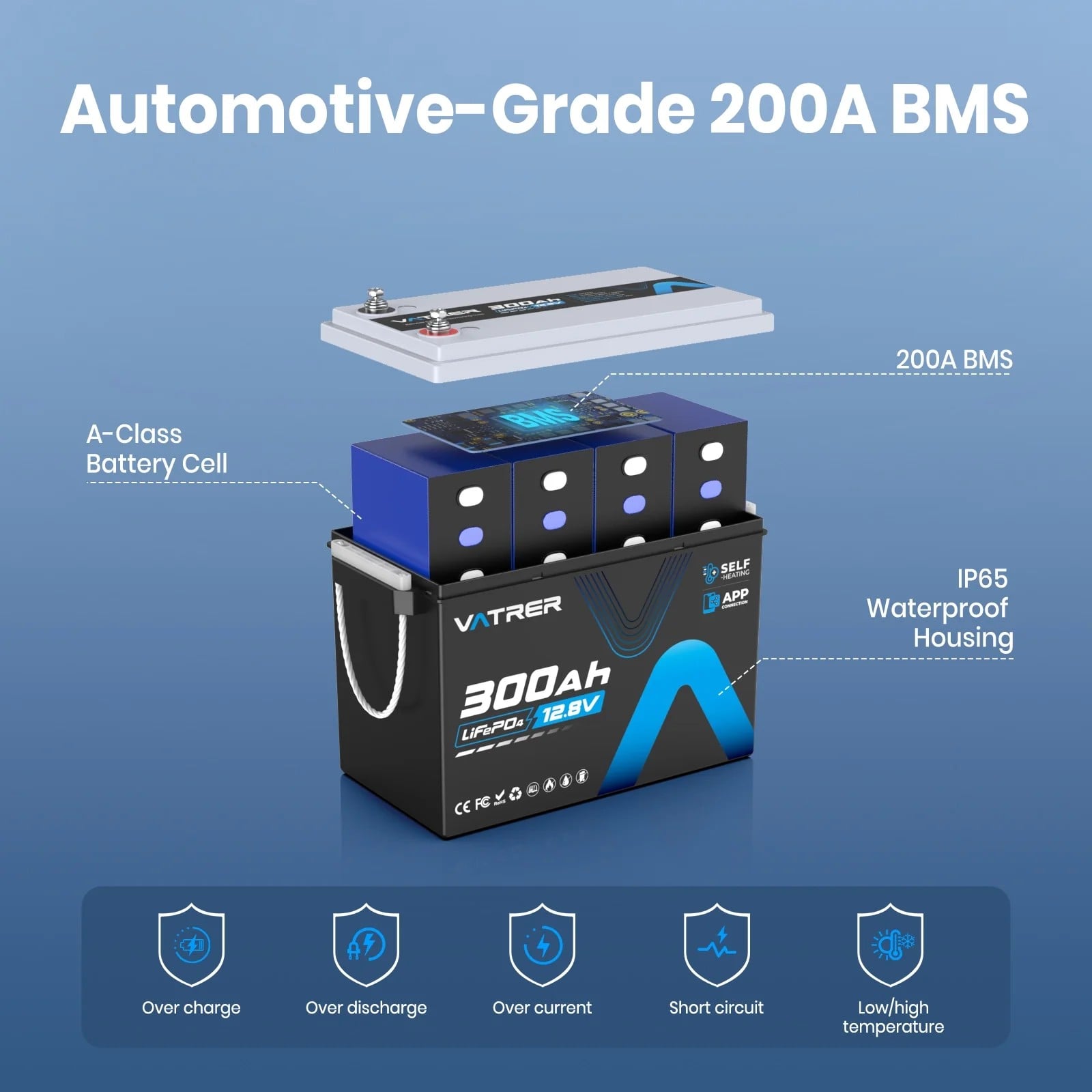
Charging must be compatible with LiFePO4 chemistry. Vatrer offers application-specific batteries and chargers in parts of its range, but an existing lead-acid charger may not provide the correct profile. Alternator charging in an RV, solar controllers and onboard marine chargers all need review. Cold-temperature charging limits are particularly important because lithium cells can be damaged when charged under unsuitable conditions unless the system includes appropriate protection or heating.
Plan Charging, Protection and Cable Sizing as One System
A system review should cover the high-current path from battery terminal to load. These items are as important as the battery specification itself.
- Nominal voltage should match the equipment or an approved conversion plan for the complete system.
- Continuous and peak current demand should remain within the battery management system and wiring limits.
- Chargers, solar controllers and alternator equipment should use a profile suitable for LiFePO4 batteries.
- Fuses, breakers, cable gauge and terminal protection should be sized for the maximum possible current.
Treat Installation and Monitoring as Safety-Critical Work
Cable size and overcurrent protection should be selected for the maximum expected current and cable length. Vatrer batteries may be capable of substantial discharge current, but undersized wiring can overheat even when the battery operates normally. Fuses or breakers should be installed according to accepted electrical practice and equipment guidance. High-current DC systems can create severe heat and arcing, so uncertain installations should be handled by a qualified technician.
Physical installation matters as well. Batteries need secure mounting, protected terminals and adequate space for cables without tight bends. Water exposure, vibration and ventilation requirements should be considered according to the application and product instructions. A battery monitor can help the user understand state of charge and consumption, but it should be configured correctly for the chemistry and capacity.
A conversion plan should also account for the behaviour of equipment at low state of charge. LiFePO4 batteries maintain voltage differently from lead-acid batteries, so gauges designed around lead-acid voltage may not report remaining capacity accurately. A shunt-based battery monitor can provide more useful information when configured correctly. The battery management system may disconnect the pack if voltage, current or temperature limits are exceeded, which protects the cells but can abruptly remove power from connected equipment. Critical applications should therefore be designed with those protection behaviours in mind. In an RV, marine system or mobility application, unexpected shutdown can be more than an inconvenience. Understanding alarms, disconnect thresholds and restart procedures is part of safe ownership. Documentation should remain accessible near the installation so future maintenance does not depend on memory. Clear labelling of cables, fuses and disconnects also helps future servicing, especially when another technician needs to understand the system without dismantling it first. A written wiring diagram can make later troubleshooting safer and faster.
A LiFePO4 upgrade performs best when every connected component is treated as part of the same design. Vatrer offers batteries for several demanding uses, while the installer remains responsible for matching voltage, current, charging and protection to the actual equipment. Careful load calculations and compatible charging prevent expensive mistakes. For complex conversions, professional electrical support is a sensible part of the budget rather than an optional extra.