
Parents of newborns hear a lot of advice about caring for delicate skin, and not all of it holds up to scrutiny. Many baby skincare myths persist simply because something natural or traditional sounds inherently gentle. Separating genuine guidance from hand-me-down assumptions matters most when a baby’s skin is sensitive or eczema-prone.
Myth: All Natural Ingredients Are Safe for Every Baby’s Skin
The idea that anything labelled natural is automatically safe is one of the most common baby skincare myths. Botanical extracts, essential oils, and plant-based preservatives can still irritate a baby’s reactive skin. This is why paediatricians often point parents toward formulas assessed specifically for sensitive and eczema-prone skin, rather than products chosen on the word natural alone.
Kokoso Baby describes its range as organic and paediatrician-approved, which is a different claim than simply natural. Its coconut oil, washes, and creams are positioned as suitable from newborn onwards, suggesting formulation care beyond a generic plant-based label. That distinction matters because a parent reading an ingredient list benefits more from knowing a product was assessed for delicate skin than from knowing it contains botanicals.
Why Coconut Oil Isn’t a Universal Solution and When It Works Best
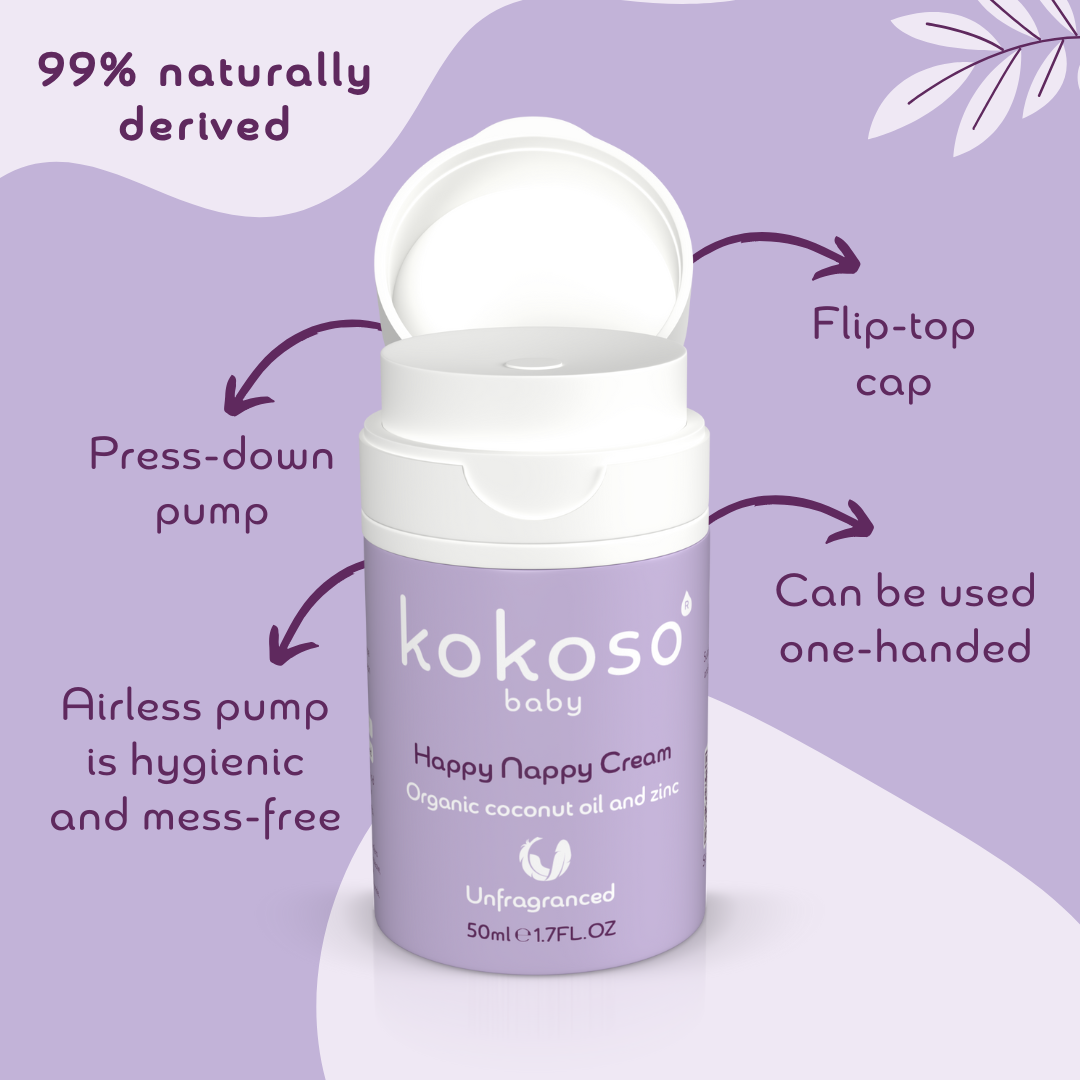
Coconut oil has a reputation as a cure-all for baby skin, yet how well it performs still depends on the individual baby rather than on the oil being a universal fix. Kokoso Baby‘s coconut oil is described as premium, raw, and cold-pressed, formulated as a multi-purpose option for massage, dry patches, and everyday moisturising. That versatility is about use cases, not a guarantee that it resolves every skin concern a baby might have.
It comes in an Original 168g size and a Mini 70g size, so a smaller option exists for trying it or for travel. It is framed as an alternative to conventional baby oil, rich in naturally occurring fatty acids meant to support the skin’s barrier. Reading the label this way helps separate what the product is formulated to do from what parents sometimes expect it to do alone.
The Fragrance-Free vs. Scented Debate in Baby Products
Fragrance sits at the centre of several myths, since some parents assume a pleasant scent signals gentleness while others avoid fragrance entirely out of caution for reactive skin. Several lines address this directly by offering fragrance-free versions alongside scented ones, including the Gentle Hair & Body Wash, the Coconut Oil Baby Lotion, and the Baby-Soft Balm Stick.
The Baby-Soft Balm Stick, for example, comes in an Unfragranced option as well as an Organic Lavender variant. Kokoso Baby offers both so a choice can be made based on a baby’s known sensitivities, rather than following a general rule about fragrance being good or bad. That kind of flexibility is more useful than treating either scented or unscented as automatically safer.
 How the Gentle Hair & Body Wash Differs from Adult Cleansers
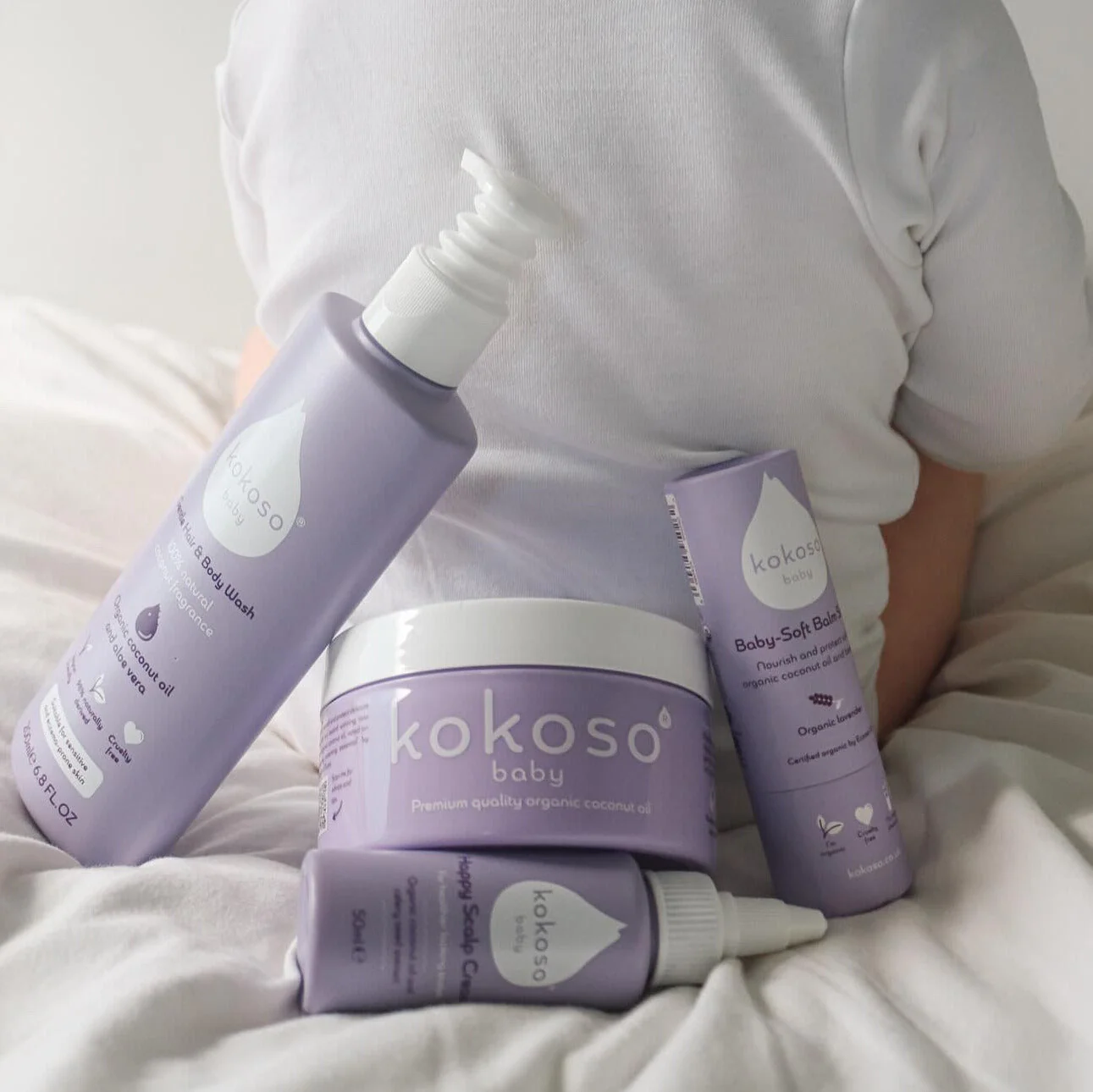
Adult cleansers are built for skin that is thicker and less reactive than a baby’s, which is why a dedicated baby wash is formulated differently. The Gentle Hair & Body Wash is a 3-in-1 formula meant to cleanse skin, soothe the scalp, and nourish hair in one step. It is described as ultra-mild and specially formulated for delicate, sensitive, and eczema-prone skin, rather than adapted from a general-purpose cleanser.
For households wanting a larger supply, a Gentle Hair & Body Wash Refill Pack is also offered at 500ml, described as an eco-friendly option for ongoing bathtime use. Both the standard wash and the refill come in Coconut and Fragrance-Free versions. That consistency across sizes means the same gentle formulation is available whether someone is replacing a bottle or stocking up.
Eczema-Prone Skin: What the Research Actually Says About Organic Care
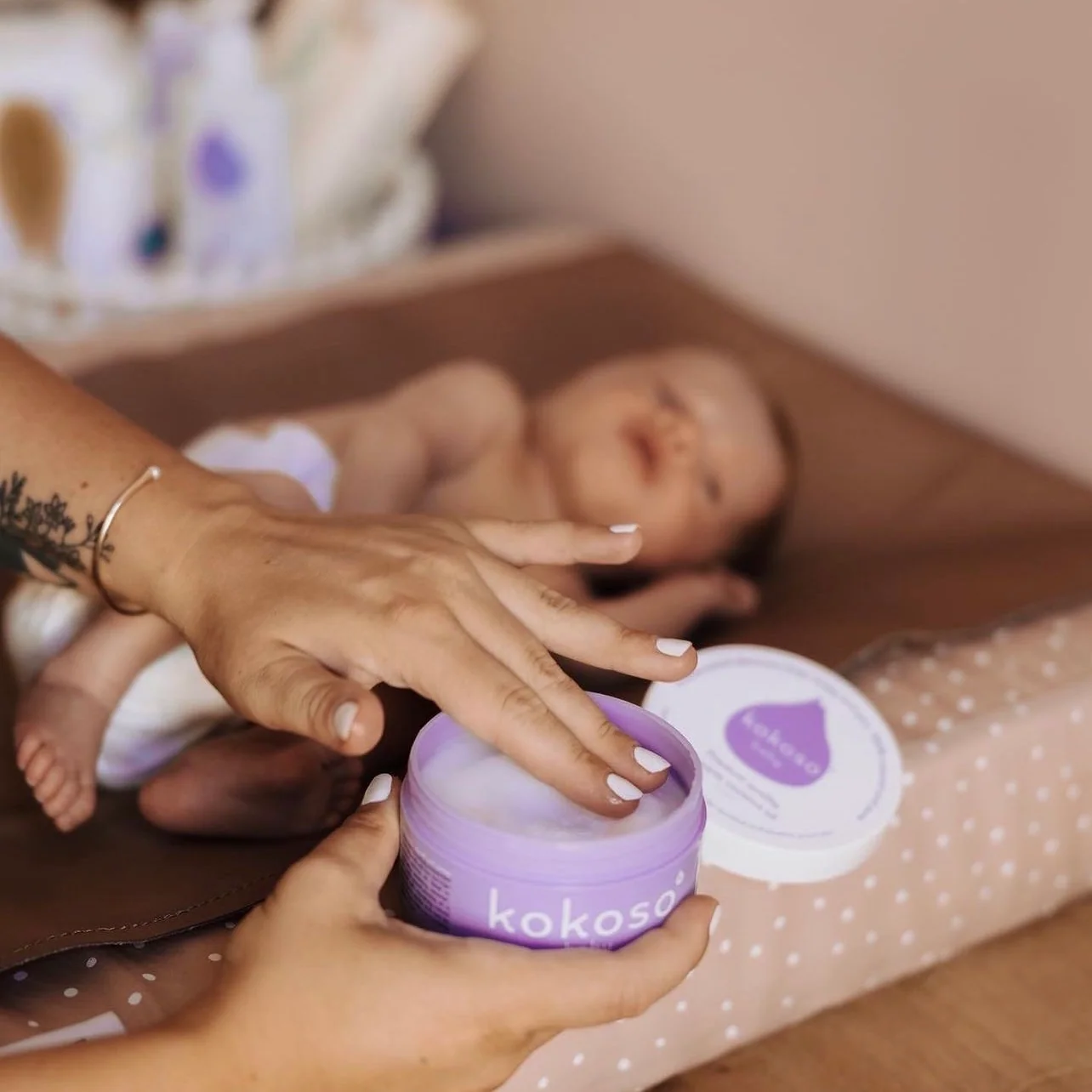 Eczema-prone skin is frequently the subject of baby skincare myths, particularly the belief that organic automatically means suitable for a compromised skin barrier. What matters more is whether a product has been formulated and tested with sensitive, dry, and eczema-prone skin specifically in mind. Several items are marketed this way, including the Happy Nappy Cream, described as paediatrician-approved and fragrance-free, intended for delicate, sensitive, and eczema-prone skin at nappy changes.
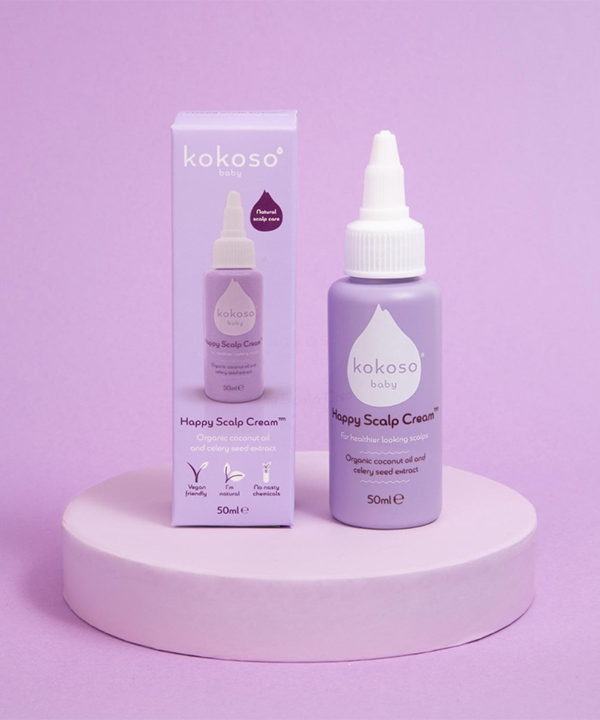
A Sensitive Scalp Set is also offered alongside a Happy Scalp Cream, both aimed at the kind of flaking or dryness that can appear on a baby’s scalp. These are positioned as dermatologically tested products rather than simply organic ones. That framing reflects a broader point in skincare generally, where formulation and testing claims carry more weight than an ingredient list alone.
Common Application Mistakes Parents Make with Baby Moisturizers
Even a well-formulated moisturiser can underperform if it is applied inconsistently or in the wrong amount. Parents sometimes reserve moisturiser for visible dry patches only, rather than using it as part of a regular routine suited to sensitive skin. Others switch between multiple products with different ingredient profiles, which can make it harder to identify what is or is not working for a baby’s skin.
- Some parents believe a product must foam heavily to clean effectively, when a 3-in-1 formula like a gentle wash is designed to cleanse without strong foaming agents.
- Many assume fragrance-free products are automatically less effective at moisturising than scented versions, despite both formats often sharing the same core ingredients.
- A common misconception holds that thicker balms work faster than lighter lotions, though absorption and spreadability depend on the specific formulation.
- Parents sometimes think organic certification alone proves a product suits eczema-prone skin, even when separate dermatological testing is the more relevant claim.
- It is a frequent assumption that baby oil and baby lotion serve interchangeable purposes, though one is typically used for massage and occlusion while the other is designed for daily moisturising.
- Some parents believe refill packs are a lesser version of the standard product, when a refill such as the 500ml Hair & Body Wash Refill contains the same formulation in a larger format.
The Coconut Oil Baby Lotion, available in Natural Coconut and Fragrance-Free options, is described as an advanced yet gentle formula for everyday use. Using a moisturiser consistently, rather than only when dryness appears, lines up with how such products are generally formulated to be used over time, and it corrects one of the more persistent baby skincare myths about moisturising being a reactive rather than routine step.
Awareness of these baby skincare myths does not call for overhauling an entire routine, just a closer look at how products are actually formulated and tested.